Make Unlimited Free Pc to Phone Calls, Free VOIP Phone Calls to India, Pakistan, USA, UK, UAE & Free Calls Worldwide, VOIP Forum ! VOIP Calls Europe. Voice over Internet Protocol lets you make free long-distance phone calls using your computer. Try new methods to Make Free VOIP Phone Calls. Discuss Voip solution, VOIP applications for free voip calls predictive dialer,
Free international calls, Cheap International calls, Voip predictive dialers, Conference call Colutions, Voip pbx, Hosted PBX,Voip telephony,Voip Business, Residential Voip service, free voip calls, free calls, free phone calls, free international calls, free calls india, cheap voip calls, cheap calls to pakistan, make free calls, india free call, voip, best voip phone, call voip, cheap voip, cheap voip calls, free voip call, unlimited voip calls, voip business, voip calling, voip calls, voip international calls, voip phone call, voip phone calls, voip phone service, voip phones, voip plans, voip solution, voip telephone.....
Showing posts with label Voip Announcement. Show all posts

Sunday, August 30, 2009

Tadiran Telecom to Provide Advanced Communications for Beijing Subway

0

Tadiran Telecom will be providing advanced communication solutions for the Beijing Subway, which is planned to become the largest subway in the world by 2015. Under the new agreement, Subway Line 15 and Daxing, which is a subway line in the southern city quarter, will include 87 units of IPx3000 system and FlexiCom 5000 system connected across 57 km of tracks. That will provide converged voice, data and video communications, dispatch and system-wide management applications for the monitoring of the whole network in real-time.

“Mission critical, converged communication systems that support voice, data, video and advanced communications have become a necessity in the transportation market. Tadiran has been leading this technological ground,” said Zeev Aviv, VP Sales & Marketing of Tadiran Telecom. “The Beijing Subway is an ambitious project with special communication requirements. Tadiran Telecom will make use of the experience, customization capabilities and know-how that it has accumulated in the transport industry over the past decade. Our flexibility and reliability have yielded success in past projects and have made Tadiran the company of choice for China’s transportation projects.”

According to the company:

Tadiran Telecom solutions are already providing mission-critical communications to much of Beijing’s public transportation, including the Beijing Subway lines 4 and 5, the Airport Express subway line, and the Beijing Airport Command Center. Due to the successful installations, Tadiran Telecom has been chosen again over competition from major players such as Siemens, Alcatel, Feihong, Ericsson and Harris. Line 15 is the sixth line awarded in the Beijing subway to KTT, Tadiran’s subsidiary in China.


Technorati Tags: , , , , , , , , , , , , , , , , , Share/Save/Bookmark

Saturday, August 29, 2009

Skype: Worth a try ? see this

0

Is Skype a good option for making calls worldwide?

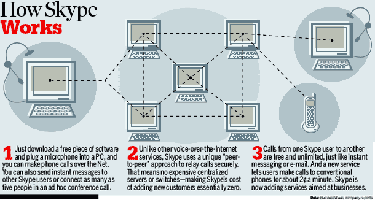
Skype – the immensely popular Internet phone product – has 50 million users worldwide though I don’t have an idea of its users base in Pakistan. It uses a proprietary technology which leverages every user’s PC resources to route calls. One of the most impressive thing about Skype is how it manages to work through all sorts of network security features which usually block similar services.

Here’s an illustration of how Skype works (Courtsey:Business Week). Here is Skype’s official explanation.

HowSkypeWorks

In this post I’ll try to assess if skype is a worthwhile tool to have. For starters Skype is free so all you need is a PC and Internet. PC to PC voice and video communication is free with Skype and with many others (Google, Yahoo, MSN). The real question is about making calls from PC to phone numbers. Calls from Skype to US and Canada are free till 2006 end.

According to WiredPakistan users and other feedback, dialup works reasonably well with Skype for some users and broadband speeds of 128 Kbps or more definitely work quite well. Skype is a good communication tool for broadband users but it is worth trying by dialup users as well. Use it before it starts charging for calls or gets blocked!

Here are some helpful tips if your connection is not that fast:
–Users on dialup or narrowband should avoid multi-tasking.
–Use a decent PC .. Skype needs at least
* 400 MHz processor; 128 MB RAM; 15 MB free hard disk space
* Sound Card, speakers and microphone


Technorati Tags: , , , , , , , , , , , , , , , , , Share/Save/Bookmark

VOIP in Pakistan: Free Calls to Pakistan a reality? see this

0

I see some interesting developments for free or cheap calls to and from Pakistan using Voice over Internet Protocol – i.e. Internet Telephony. This is in parallel to new services (Rebetel and FreeCallPlanet for instance) in US and Europe which allow international calls through mobile phones for the price of regular domestic calls. For a recap of Pakistan’s VOIP situation see my previous posts about free calls to Pakistan and Skype. Also see this post from KO for historical background.

In 2006 there was a lot of turbulence around VOIP in Pakistan. The policy of PTA towards VOIP has never been clear. Some companies in Pakistan – Braintel for instance - have started offering services but they are under the threat of violation of current policies. Some companies are using VOIP to route calls from Pakistan to abroad – that is they provide you a Pakistan number which rings on your US phone - for a monthly fee of $30-50. In future there may be a possibility of a package for calling Pakistan for $10/month flat from FreeCallPlanet.

PTA raided many illegal gateways and claimed that such “grey telephony” setups were costing it millions of rupees. There was an unfortunate incidentas well in which a software startup in Islamabad was wrongly accused of using VOIP termination and its innocent CEO was jailed for many days. This caused a lot of uproar from Pakistan Software professionals and organization.

As a response to all that PTA has made this announcement on its site:

The main issue here is the termination fee – the amount PTCL wants to get for routing the call through its infrastructure (PSTN). This is the reason why international calls to Pakistan are still so expensive as compared with calls to US or Europe etc. That is why Pakistan does not show up on FuturePhone (not in service anymore) list of countries where you can call for the price of a domestic call from the US. By the way Etisalat has been doing the same thing in UAE and has blocked Skype there. It is high time that PTA fixes this mess by opening up VOIP and allows free market competition to roll in.


Technorati Tags: , , , , , , , , , , , , , , , , , Share/Save/Bookmark

WiMAX in Pakistan Must Read

0

In 2006 Wateen-Motorola WiMAX project in Pakistan created a lot of buzz all over the world. Many similar trials and services are being offered around the World. However it is still a big unknown if Wimax will be a success in emerging markets of Pakistan, India, Bangladesh and China. Can WiMAX deliver its promise of affordable broadband with wide coverage? Some skeptics think that WiMAX is more of a hype created by industry and not a reality yet. Of course adoption by public will be the proof of its success.

In Pakistan, Wateen’s project is going ahead full speed and it might be available for public in later half of 2007, according to Business Recorder. According to some blogs and discussion forums Wateen may offer WiMAX to 22 cities in the first quarter of 2007. Malaysian owned Dancom also started offering Wimax in Karachi, starting with the business community. Their prices are still high for consumers.

Let’s take a look at the WiMAX technology and how can it meet broadband needs of today. See illustration below (source Telecom Magazine) for end-to-end view of WiMAX.

The WiMAX Forum, an industry coalition, defines it as:

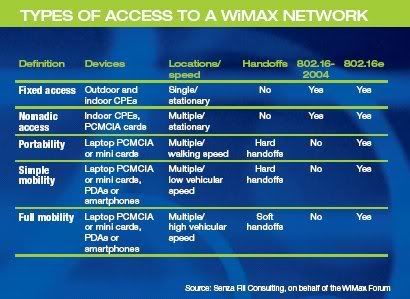
WiMAX is a standards-based technology enabling the delivery of last mile wireless broadband access as an alternative to wired broadband like cable and DSL. WiMAX provides fixed , nomadic, portable and, soon, mobile wireless broadband connectivity without the need for direct line-of-sight with a base station. In a typical cell radius deployment of three to ten kilometers, WiMAX Forum Certified™ systems can be expected to deliver capacity of up to 40 Mbps per channel, for fixed and portable access applications.

Point-to-multipoint wireless solutions based on WiMAX could have the potential to address the performance and economic challenges associated with providing cost-effective broadband access in the infamous last mile. The graphic below (source Telecom Magazine) shows how a wide range of end users can be served using which of the IEEE standards e.g. IEEE 802.16e-2005 for data mobility.

In addition to broadband Internet access, applications that are supportable with WiMAX include instant messaging, multiplayer interactive gaming, streaming media, VoIP, video and teleconferencing, and media content downloads.
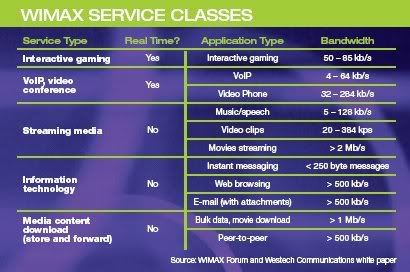
As explained here, a typical WiMAX operation will be comprised of WiMAX base stations deployed in a cellular fashion to provide ubiquitous coverage over a metropolitan area. WiMAX base stations can be connected to the edge network by means of a wireless point-to-point link or where available, a fiber link.
Major Players

Some of the major names include: Motorola, Intel, ZTE, Samsung, Alcatel, Alvarion, Sprint, Aperto Networks.

From the US mobile phone proivders, Sprint has emerged as a champion of WiMAX. Sprint announced that mobile WiMAX is its 4G wireless technology of choice. It plans to begin building an entire Web-based phone network tuned to WiMAX starting next year. Intel, Motorola, and Samsung have invested heavily in the technology.

Challenges

There are plenty of issues which can bog down WiMAX. Here’s a brief overview.

  • Price obstacle – the equipment costs are still too high
  • Spectrum – in many countires the availability of spectrum for WiMAX is a major issue
  • Standards – issues of of interoperability between OEMs and carriers abound
  • Intellectual Property – As of September 2006, there were more than 1,500 patents distributed among 330 companies on WiMAX technologies
  • One wonders if 2007 is the year when Wimax becomes mainstream? At least Motorola believes so!

    Continue below to read some opinions from the Telecom Press.

    Telephony magazine reports: The WiMAX sector definitely has some cause to be excited, but they aren’t in the clear just yet. The critics may be slightly cowed, but they still have a lot of good points. Sprint aside, WiMAX is still an unproven technology aside from Samsung’s WiBro networks in Korea. And even the ostrich feather in WiMAX’s cap, Sprint, isn’t exactly the proof of the WiMAX business case these conferees would hope. The peculiarities of its spectrum, regulatory deadlines for deployment and the lack of availability of latter generation CDMA technologies all contributed to Sprint’s choice of WiMAX. Other carriers won’t face that pressure. In fact, pressure might go in the opposite direction, forcing them to deploy latter-day UMTS technologies even if they like WiMAX.

    More on Wimax in Pakistan and Aisa in coming months.


    Technorati Tags: , , , , , , , , , , , , , , , , , Share/Save/Bookmark

    Cell Phone Users in Pakistan Prefer Style

    0

    Report from The Nation. A latest study conducted by Nokia pointed out that the people in Pakistan prefer style more than the need of being connected. The study says that the new devices combined with a attractive fold design with quick cover keys is bringing out substance to style, which is more acceptable in Pakistan as compared to other markets in the region of Asia and Asia Pacific. The study said that for innovation-conscious users ‘we need to offer intelligent and entertaining multimedia functionality in an easy to use, ultra slim package’.

    Talking to The Nation regarding the study and cell phone users preference for Nokia in Pakistan, Tomi Paatsila, Vice President of Mobile Phones Sales and Market Operations for Nokia in the Middle East and Africa said that the users in Pakistan had surpassed others in the demand for innovation in technology.

    He said that the cell phone users in Pakistan were involved more in style, which was beyond their expectations. He said the users in Pakistan needed style and design more than other features.

    He said that Nokia was considering of doubling its investment in Pakistan looking at the response. He said that Nokia has conducted a comprehensive and detailed study of mobile phone users and Pakistani users have surpassed their forecast in the market which will be over 3 billion subscribers by 2008.

    Tomi said that youngsters demanded innovation in multimedia computer that brings the complete experience to a sleeker body. He said that Nokia has created a very eye-catching device using premium materials to enclose world-class features and experiences.

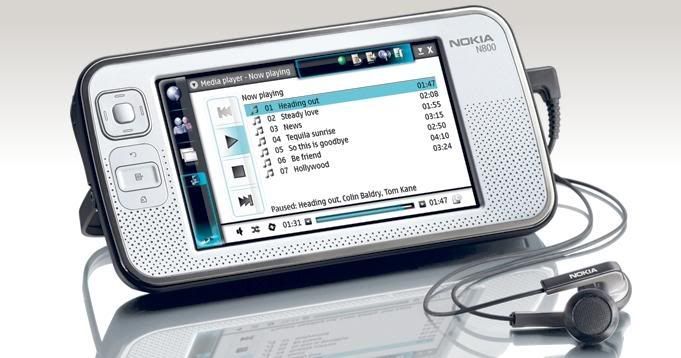
    He said that Nokia had introduced a trimmer fold model to its Nokia N-series line up, a new multimedia computer that brings the complete experience to a sleeker body, with little compromise. ‘With the Nokia multimedia computer technology and design come together to create a revolution in design for a multimedia computer’, he said.

    ‘We do not want to compromise any of the key Nokia N-series experiences when we designed the stylish Nokia multimedia computer’, he said, adding, that consumers were conscious technology users and with them in mind ‘we want to offer intelligent and entertaining multimedia functionality in an easy to use, ultra slim package’.

    He said that Nokia music fans will appreciate the dedicated quick cover keys on the Nokia, which let them quickly and easily control the device’s music features from the outside of the folded device, for instant tunes wherever they are.


    Technorati Tags: , , , , , , , , , , , , , , , , , Share/Save/Bookmark

    Pakistan phone number for Pakistanis Abroad

    0

    I have written about VOIP and voice over internet services here and here. These voip services are changing the way expatriate Pakistanis communicate with Pakistan. These voip services are one of the factors which will cause Pakistani phone numbers to change from 7-digits to 8-digits (see my post about this). At the same time the rates of international calls have dropped dramatically in Pakistan because of increased competition in long distance arena.

    However there is nothing like dialing a local number and reaching your friend or family anywhere in the world. This is becoming quite common with many VOIP companies providing this service. You are given a Pakistan phone number and that number is pointed to your phone number abroad. So far so good. But one has to be careful before signing up for such services. Often the companies providing these services are new and share little information about their background. Sometimes they packup and close shop leaving users without service and the pain of a non-working number. For these reasons it is better to choose established and reputable companies which can provide better service. I am often asked about these services so I keep an eye on what’s out there. Usually for $30-40 you can find a service with unlimited incoming calls and perhaps a few hundred minutes of outgoing calls.

    As part of my research, I have been testing the call forwarding service from Vonics. I was provided with a Lahore phone number and that number rings on my home phone in US. The service is about $30 per month – more info here . The voice quality is superb and customer service is prompt. The interesting thing about Vonics is that they provide phone numbers in 37 countries and (depending on the plan you choose) they also compete with top-notch players such as Vonage and Packet8 by allowing unlimited calls within US/Canada. Vonics told me that more plans will be introduced very soon.


    I believe that this will become a popular and common service and many other players will jump in. The price will likely fall from $30s to $20s.

    Have you tried any such service? Please share your experience with others.


    Technorati Tags: , , , , , , , , , , , , , , , , , Share/Save/Bookmark

    Future of Voice and VOIP must read

    0

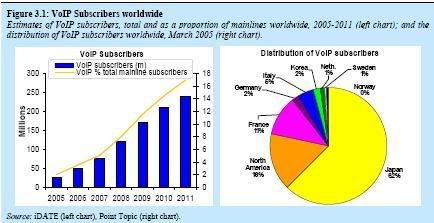
    I came across an interesting paper at the ITU site titled “The Future of Voice” – you can also get the paper here at State of Telecom in Pakistan. This paper is a good guide to VOIP technologies and how different countries are dealing with it. It also talks about the future growth of voice markets and the technology trends which accompany it. In my next post I’ll write about the mention of Pakistan’s case in this paper.

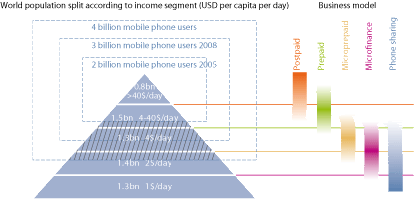
    At a related ITU workshop on this topic on Rauno Granath, Nokia’s Director of New Growth Markets and Networks, predicted that the worldwide number of subscribers to mobile telephony will reach 4 billion by 2010, and about 80 per cent the growth will come from lower income, emerging markets.

    How will the Evolution of business models evolve to reach low-income consumers? This huge rowth in worldwide mobile subscribers means new business models must be created to meet the needs of low-income subscribers in emerging markets. The illustration below is an interesting way to look at it.

    Source: “Voice services in new growth markets,” presentation by Rauno Granath, Nokia.

    The paper also has a good number of illustrations, tables and data.


    Technorati Tags: , , , , , , , , , , , , , , , , , Share/Save/Bookmark

    Grey Telephony in Pakistan New

    0

    Continuing the discussion on VOIP in developing countries and in particular in Pakistan, this post looks at the issues with regulating VOIP and the Grey telephony market. Pakistan Telecommunication Authority (PTA) defines Grey telephony as: the use of illegal gateway exchanges to bypass legal PTCL gateways and terminate/originate international traffic, including through VoIP gateways, GSM gateways, WLL phones, mobile SIMs or other related equipment. This traffic may then be distributed onwards using WLL and mobile numbers. It is claimed that gery telephony costs losses of over Rs. 3 billion annually.

    Of course the laws regarding unauthorized or illegal use of VOIP vary from country to country. Developed countries regulate the technology to protect consumers and to encourage competition. Developing countries view VOIP as a legal and revenue issue and try to exert control over it. Many times its the law which is vague and does not clearly specify clearly when VOIP is allowed and when its not legal. Last year in Pakistan there was lot of hue and cry when a software company in Islamabad was harassed on suspicion of illegal VOIP activity – it proved to be a completely baseless allegation. See this article for a good roundup of the story and for the different scenarios of VOIP usage in Pakistan. This kind of blatant use of authority and regulatory uncertainty combined with lack of technical knowledge by the authorities is a major obstacle for VOIP adoption and hurts the business deeply. Operators deserve to have a clear and predictable regulatory framework that helps to guarantee returns on investment. Please note that the picture above of a VOIP lab (courtsey Flickr) is just for illustration.

    In the paper Future of voice and VOIP, referred to in my last post there is some interesting discussion which I’ve included below with my comments.

    Grey markets can offer cheaper rates because of the high profit margins that may be charged by incumbents that enjoy a monopoly (such as PTCL which had a monopoly a few years ago). For example, a caller might have to pay the 100 Rs for an international call that costs the incumbent operator about 3 rupees. Against this background, and despite legal crackdowns in various countries, the grey market looks set to flourish in Africa. According to Russell Southwood of Balancing Act, in most African countries the grey markets can be substantial (accounting for between a quarter and a third of international call revenues), and this has exerted strong downward pressure on prices.

    Here’s some more commentary from the report about Pakistan’s VOIP situation:

    PTA has issued technology-neutral licenses. VoIP services may be offered by Long Distance & International (LDI) and Local Loop (LL) licensees. 11 companies in Pakistan offered VoIP in 2005. Some new operators are looking to deploy IP-based networks and PTA is working on the necessary arrangements to tackle issues of QoS, numbering plan, internet telephony and costing methodologies etc. ISPs are not allowed to offer VoIP.

    ISPs are licensed as either Electronic Information Service (EIS) or Non-Voice Communication Network Service (NVCNS) providers, neither of which permits licensees to allow voice over their data circuits.

    PTA has issued policy guidelines to ISPs, PTCL, cellular mobile, LDI, LL and WLL operators to address illegal call termination/origination. Different guidelines have been issued to licensees, depending on the nature of their businesses. Licensed operators are responsible for maintaining updated client records, monitoring clients (in specific categories such as heavy users, users with a specific pattern of usage etc.), the correctness of their customer’s antecedents, and for overseeing clients on the transportation of voice on data circuits and formulation of their SOPs /procedures to discourage illegal activities and helping PTA. A clear strategy and a Vigilance Committee have been established to eliminate grey traffic and illegal call termination in June 2006, comprising the Pakistan Telecommunication Authority (PTA), the Ministry, PTCL and other operators. PTA now regulates international bandwidth rates and has directed PTCL to review its rates to promote broadband in Pakistan, building on Pakistan’s Broadband Policy published in December 2004.

    In Pakistan, illegal grey traffic is estimated to cause losses of around Rs.3 billion annually. Pakistan has established a clear strategy to eliminate grey traffic and reduce illegal call termination. In June 2006, a Vigilance Committee on illegal telecom traffic was established, including the

    Ministry of IT & Telecom, the Pakistan Telecommunication Authority (PTA), PTCL, telecom operators and other concerned agencies. The Government of Pakistan sees grey market telephony as a serious concern, causing revenue loss not only to Government, but also to all stakeholders. DSL operators and Internet Service Providers (ISPs) were asked to provide antecedent static IP addresses to PTA on monthly basis so that suspected IP users can be located. The PTA has developed Call Data Record (CDR) analysis that enables PTA to identify illegal sources of call termination. This may result in Long Distance & International (LDI) licenses being cancelled. Steps are being taken to curb the illegal call termination business. Last year, PTA reduced the Accounting Settlement Rate by 38.6 per cent to reduce the financial incentives for grey telephony and conducted 20 raids against illegal call termination business (with the help of PTCL and the FIA). Technical solutions to monitor grey traffic are being explored.


    Technorati Tags: , , , , , , , , , , , , , , , , , Share/Save/Bookmark

    Voip, DIDX and Super Technologies

    0

    Super Technologies started its journey from the (then) innovative idea of Internet faxing back in 1987, morphed into a VoIP service company with a Pakistani network, changed to a hosted VOIP platform and finally, the team hit the sweet spot (incidentally as a by-product) of becoming a marketplace for an unusual telecommunication resource that nobody had not spotted before in the same context. The company has a number of developers working OUT of Pakistan.

    So what is DIDX and what do they do? DIDX is about selling and buying an unusual, untapped asset that a lot of telecos are sitting upon – the E.164 numbers they give out to ‘their’ subscribers who take one (or more) service from them.

    One of the core forces behind DIDX is Rehan Ahmed Allahwala. Rehan works alongside his American mates who front the company worldwide in commercial and marketing domains. Rehan leads the team that works on new ideas …… Read more.


    Technorati Tags: , , , , , , , , , , , , , , , , , Share/Save/Bookmark

    Voice over Bandwidth of ISP’s and DSL Operators — Illegal

    0

    It was a total surprise for me when I came to know that as per PTA (Pakistan Telecommunication Authority) Act (laws and regulations) voice traffic over bandwidth of ISP’s and DSL operators is illegal. This Public Information Bulletin of PTA confirms it. The information bulletin also terms such voice traffic as “grey traffic”, traffic which is illegal.

    So, in the recent meeting on the issue of Grey Traffic held at PTA Headquarters, PTA has directed all Internet Service Providers (ISPs) to ensure that their networks are not used for illegal call/voice termination and such cases of grey telephony are brought into the notice of PTA immediately.

    Does this mean NO Voice Chat on Broadband ? No Skype?. I think PTA should reconsider on this move and make necessary amendments in its Act to facilitate services for home users.


    Technorati Tags: , , , , , , , , , , , , , , , , , Share/Save/Bookmark